
How Buildings Help Us Think Again
A thought to consider…
We like to think behaviour comes from discipline and motivation.
But behaviour is often designed into us by space.
Walk into a cluttered, loud, visually busy room and notice what happens.
You rush.
You skim.
You interrupt.
You lose your place mid-thought.
No one told you to do that. The room did.
Now step into a calm space with daylight, clear circulation and somewhere for your eyes to rest.
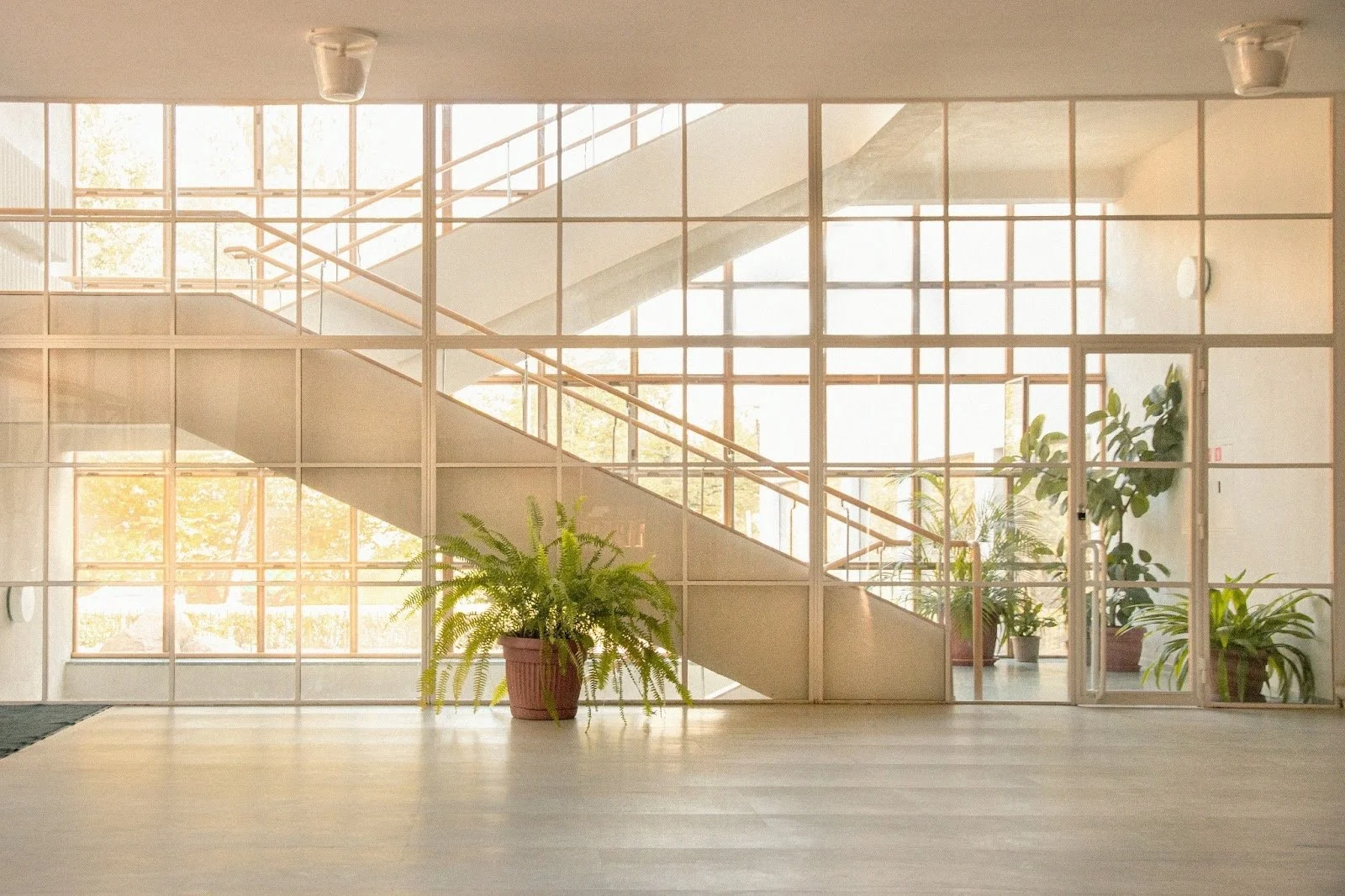
Your shoulders drop.
Your breathing changes.
Thinking feels easier.
Most of the buildings we spend our days in are unintentionally overstimulating.
Too much visual input.
Too much noise.
Too many micro-decisions.
They reward urgency and punish depth.
So here’s a quiet question as the year turns:
Are we trying to fix our focus with willpower, when the real issue is the environment we keep placing ourselves in?
Here’s another:
What would happen if clarity started with removing a little friction from the spaces around us?
Eng-Spire Labs: A Small Spatial Experiment
This is a small one. It’s almost boring.
Those are usually the good ones.

Pick one space you move through every day: your desk, a meeting room, a corridor you always rush through.
Change one thing that reduces cognitive load.
Clear a surface.
Dim a light.
Close a door.
Move a meeting to a space with daylight.
Then notice; not productivity, but behaviour.
Do conversations slow down?
Do people listen longer?
Do decisions feel easier?
Spaces shape behaviour whether we design them to or not.
This experiment just helps you see it happening in real time.
Structural 101: Designing for the Mind
Can a building help you think?
Can the environments we design actually restore attention?
There’s a growing body of research showing that specific environments help people recover focus, think more clearly and make better decisions. We intuitively know this; we feel it the moment we step into a calm space with daylight, air and clarity.
Yet we rarely design for it on purpose.
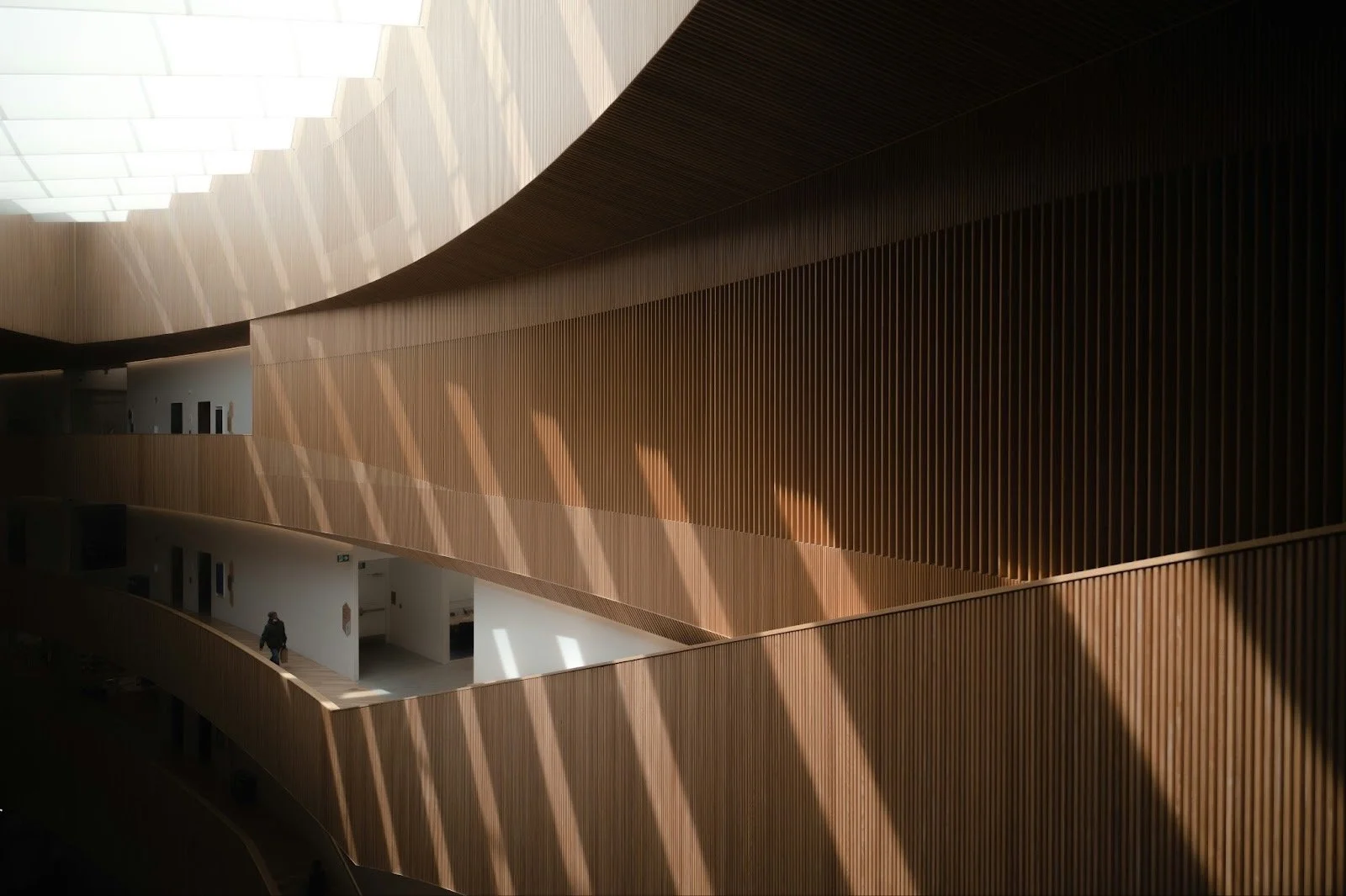
Here are a few practical considerations for the buildings you’re designing, building or working in right now:
Cognitive fatigue is a real design load
As engineers, we’re used to accounting for invisible forces.
Cognitive fatigue is another one.
Ask early:
Where do people need deep focus?
Where do they need recovery between tasks?
Where might the space be adding unnecessary mental effort?
If a space requires constant interpretation, it’s already overloaded.
Reduce stimulation before adding features
Overstimulating environments drain attention quickly.
Before adding more glass, finishes, screens or signage, ask:
What could be removed without reducing function?
Visual calm, consistency and legible layouts reduce cognitive load far more effectively than layering features.
Daylight belongs where people move and think
Daylight isn’t just for perimeter rooms.
Use it intentionally in circulation paths, collaboration zones and pause spaces between tasks.
When people encounter light and visual depth as they move through a building, their attention recovers without anyone needing to schedule a break.
Acoustics quietly shape behavior
If background conversations are intelligible, the brain treats them as tasks it must process.
Design with clear acoustic zoning: loud collaboration areas, quiet focus spaces, transitions in between.
Sound shapes behavior just as much as walls do.
Wayfinding should disappear
Every moment spent figuring out where you are adds cognitive load.
Good wayfinding relies on clear circulation, predictable geometry, daylight as orientation and meaningful landmarks.
If a building needs instructions to navigate, it’s already asking too much.
The best buildings don’t just function. They reduce friction. They restore attention.
They help people think again.
Your Turn: Remove One Friction Point

As the year closes, try this:
Instead of setting a goal, remove one source of friction.
One surface.
One noise.
One unnecessary decision.
Clarity doesn’t always come from adding something new.
Sometimes it starts with taking something away.