
Someone Stop the Designers
It happens all the time on building projects.
Contractors are waiting for more design before they're comfortable providing a cost.
Designers are waiting for cost feedback before they know what needs to change.
Both positions make sense.
And both sides wait.
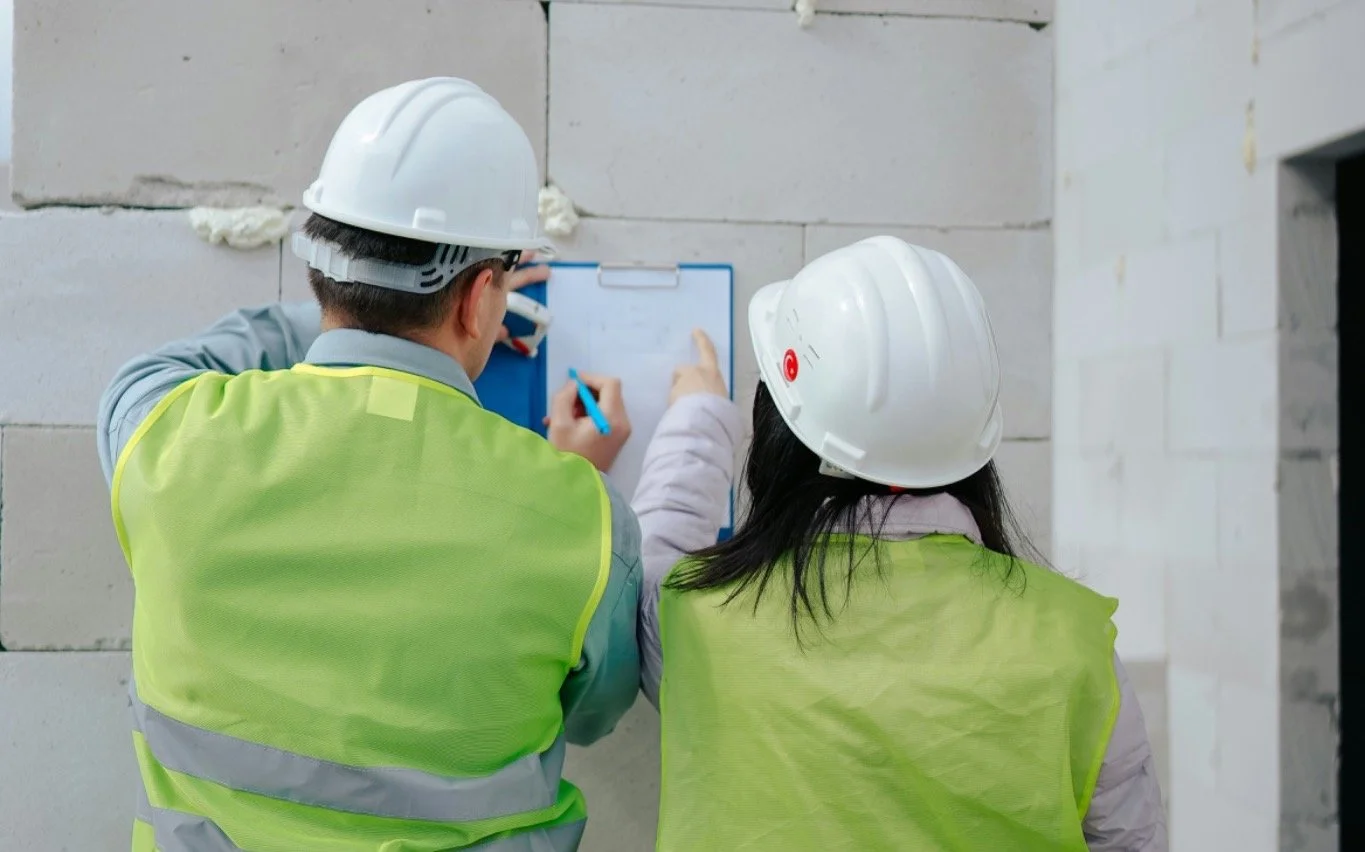
A note to the contractors and owners out there: here's a little secret about designers.
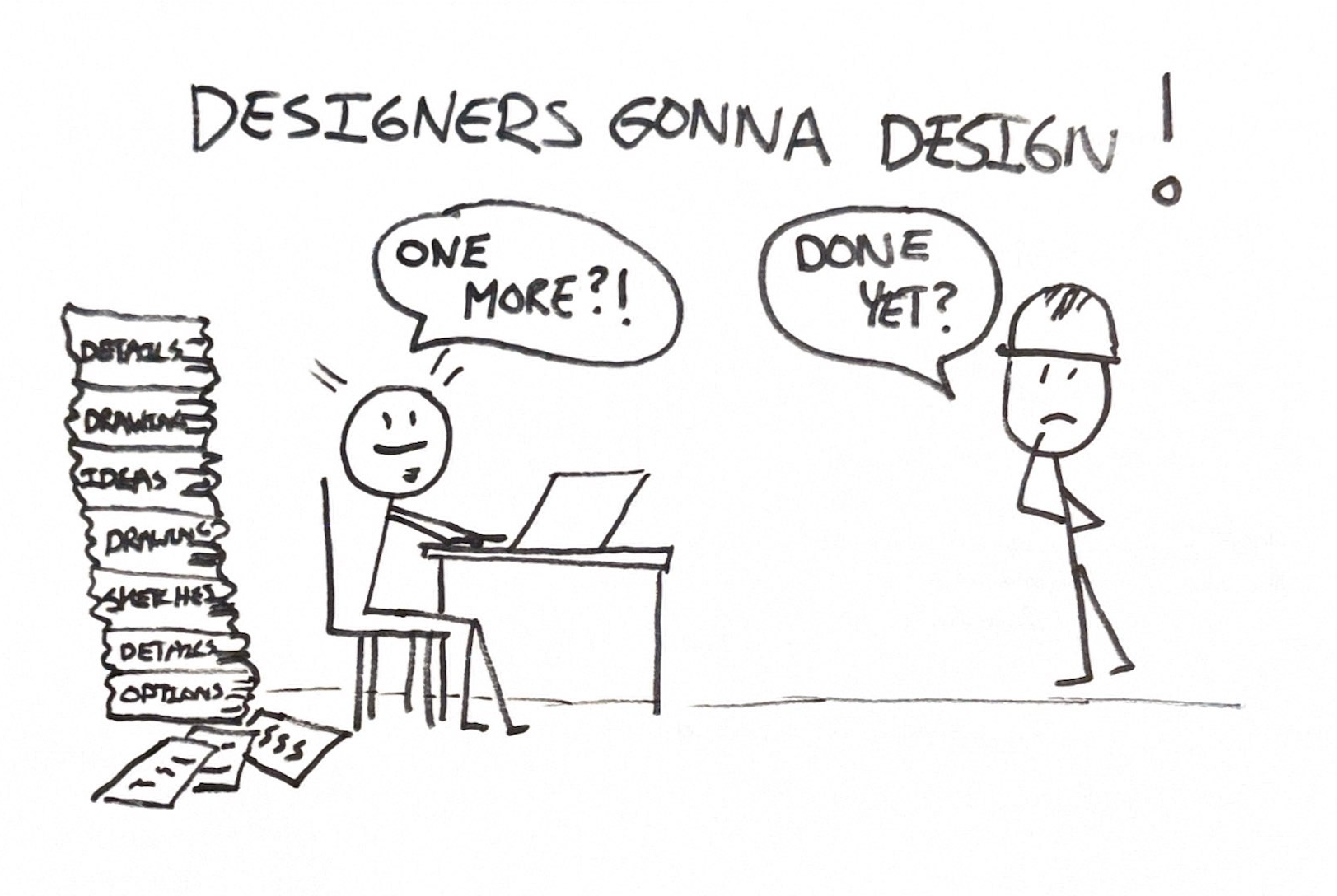
DESIGNERS LOVE TO DESIGN.
That's not to say designers have too much time. On many projects, it's exactly the opposite.
But there is always more design that could be done.
Give a designer another week?
They'll find another problem to solve.
Another option to explore?
They'll explore it.
More information?
They'll refine the design again.
That's their job. And it's part of what makes good designers really good.
But there's a catch.
Without feedback, designers can get really good at designing something the project can't afford.
Then they proudly hand over substantially more information, only to hear:
“Yeah... that's way too expensive.”
That's why contractors and owners have an important job, especially on collaborative delivery projects.
Interrupt them.
Don't wait for perfect drawings before providing cost feedback.
Tell them what is known now.
“This looks expensive.”
“We're carrying a huge allowance here.”
“This system worries us.”
“You're designing something we probably can't afford.”
It might be wrong.
That's okay.
Because now the designers have something to react to.
Waiting for more information feels responsible.
Acting with incomplete information feels risky.
It's much safer to say:
“I need more information before I can price it.”
And sometimes that's absolutely true.
But early in design, there is always more information that could be produced.
So perhaps the question isn't:
“Do we have enough information?”
It's:
“Do we have enough information to take the next step?”

Give designers a range.
Identify the risk.
Circle the expensive thing.
Give them a target.
Then send them back to their happy place.
They'll sketch. Test. Adjust.
Then contractors can price again.
And around it goes.
Because early in design, teams don't need certainty to move.
They need to move to create certainty.