
The Foundation of a Smoother Build
A thought to consider…
The best construction projects don’t succeed by accident.
They succeed because the right people come together to build something that lasts.
Stephen Covey once said, “Slow is smooth, and smooth is fast.”
It sounds simple, almost obvious; yet in construction, we often forget this.
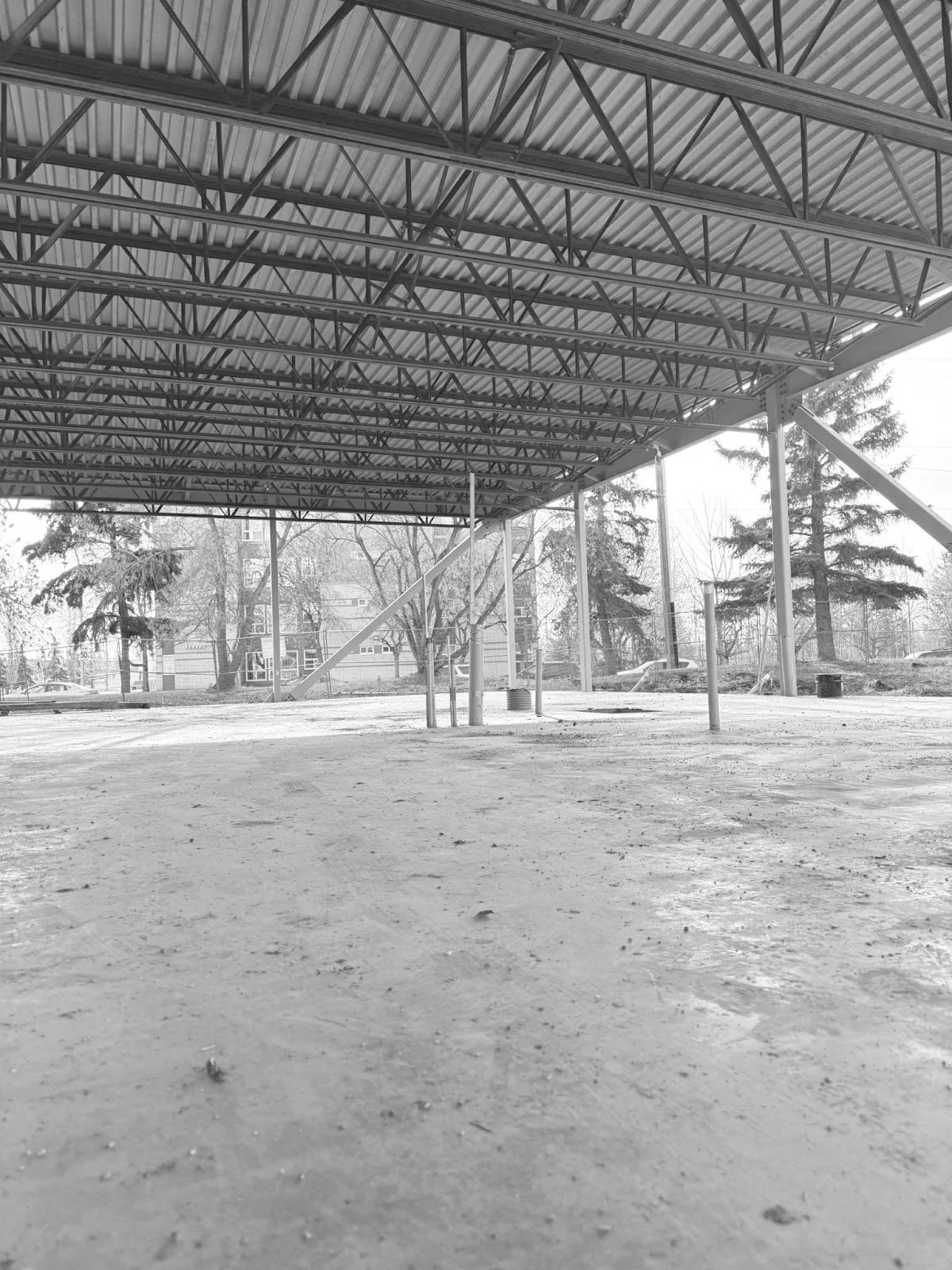
Many projects sprint out of the gate:
Get the permit. Beat the thaw. Push the schedule.
Push the design.
Push the trades.
Push everything.
What races at the beginning often limps at the end. Haste creates rework. Rework creates friction.
Friction slows everyone down.
King’s University reminded us what happens when a team pauses long enough to breathe.
When the right people gather early, when trades care about each other’s scopes, when a project is treated as a single organism rather than a collection of tasks, those moments of shared intention become the quiet superpower behind a build that moves smoothly because it started slowly.
Eng-Spire Labs: The Slab That Set the Tone
King’s University gave us a choice: structural slab or slab-on-grade.
The soil pushed us toward the structural slab, but the team leaned into it with intention; one pour, one continuous placement, one common goal.
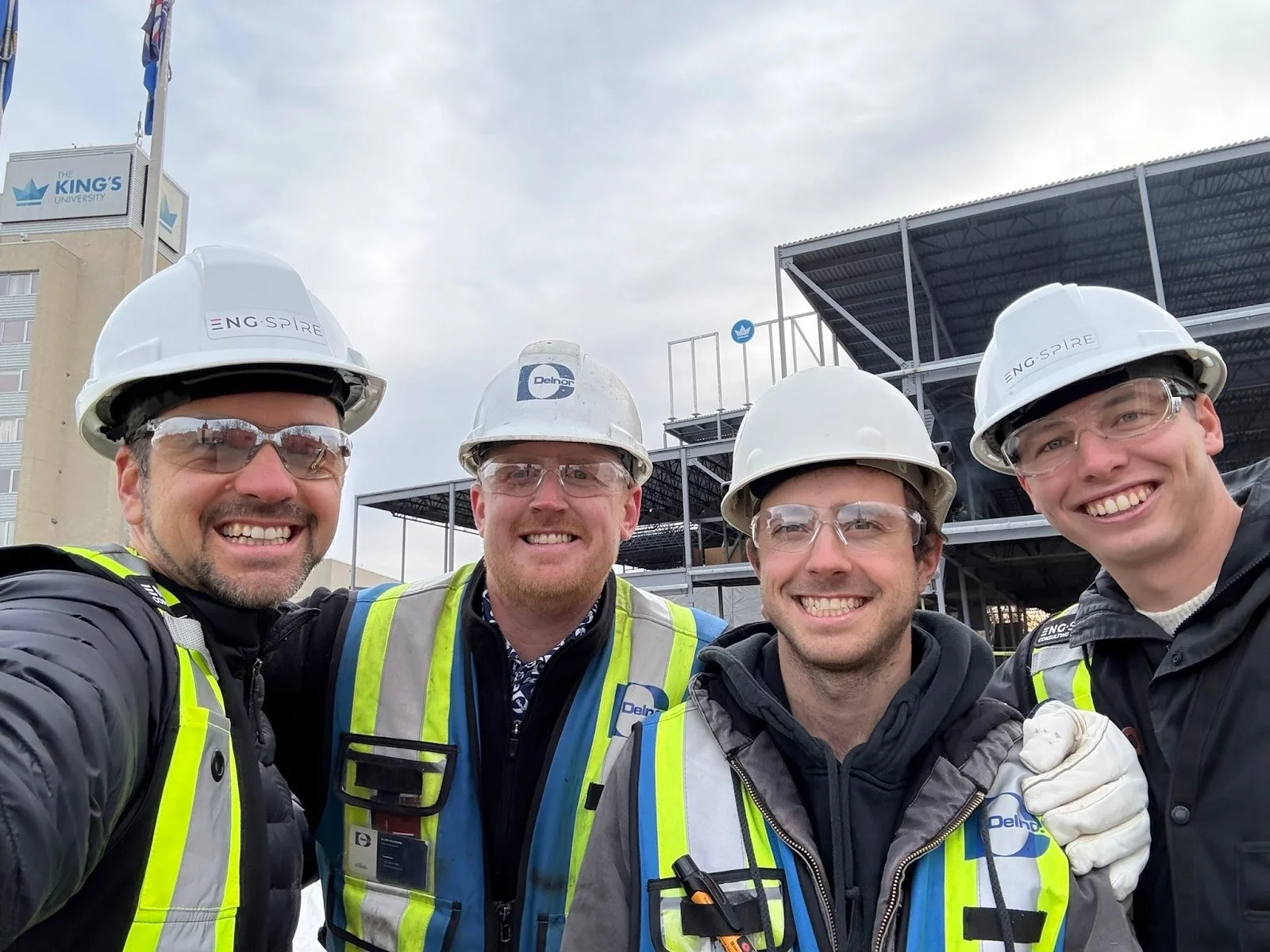
Alan Gilmore, Superintendent for Delnor Construction, summed it up best:
“A structural slab keeps everyone honest. It’s on the critical path and demands early coordination. You only get one shot, so you’d better get it right. The reward is huge, though; once it’s down, the whole site feels like it finally stopped fighting you.”
He was right.
Every anchor rod was within an eighth of an inch.
No slotting. No field welding. No site fixes.
That kind of precision only happens when the concrete team, surveyors and builders operate as one high-functioning unit.
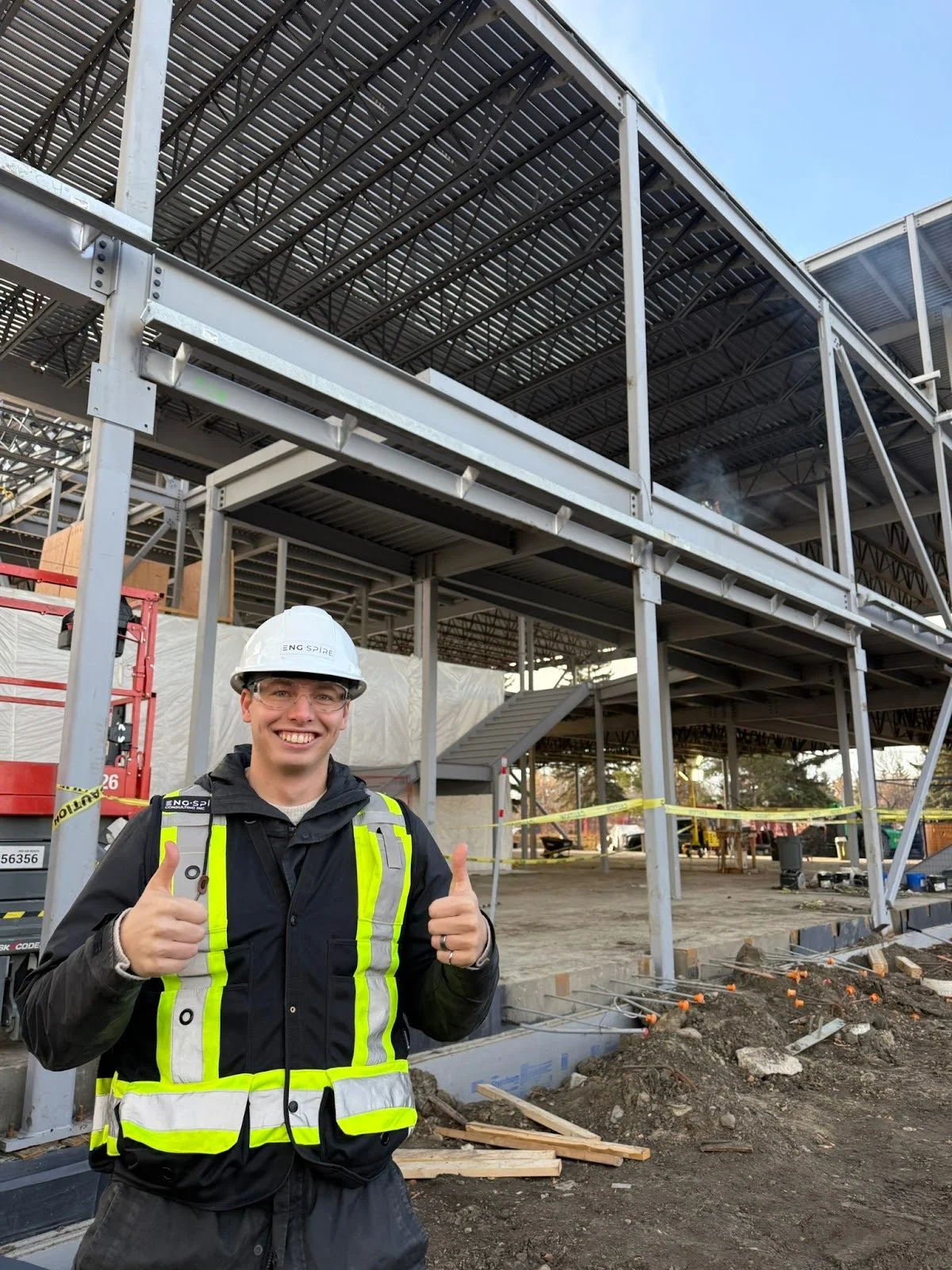
Credit goes to the full crew that brought this slab to life:
Delnor Construction led the coordination.
Axiom Concrete Finishing poured with care.
One Time Builders formed the grade beams.
Hagen Surveys handled layout with precision.
Goldbar Reinforcing delivered the rebar backbone.
The structural slab forced the project to slow down up front: pre-pour coordination, early consultant alignment, true choreography between disciplines.
Because of that slower beginning, the project accelerated later.
The slab created a dry, clean, stable platform for all trades.
It removed mud management from the daily battle plan.
It made the site friendlier, faster and far more predictable.
The lesson was clear:
When the team works for the next person instead of only their own scope, the whole project gains momentum.
Structural 101: What Lies Beneath
A structural slab and a slab-on-grade look identical from above, but beneath the surface, they belong to different worlds.
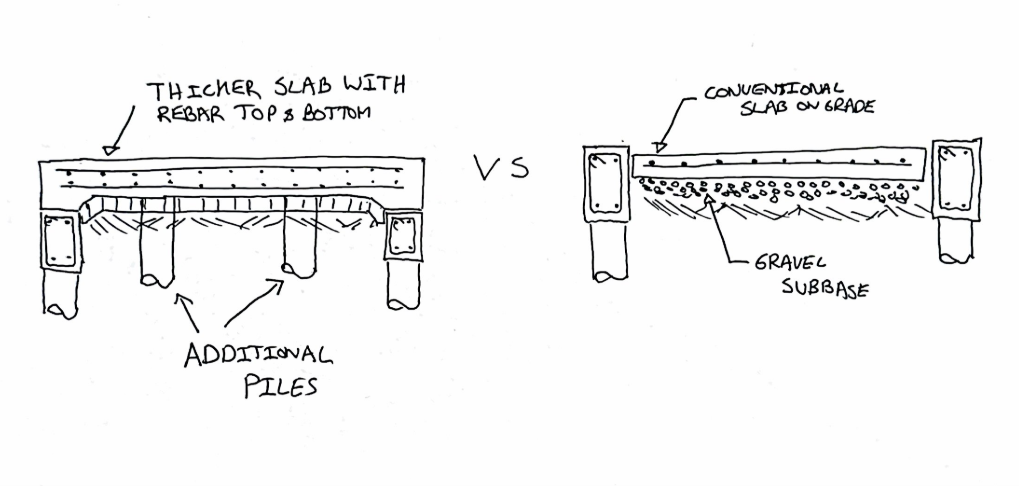
A slab-on-grade rests on soil that could expand, contract and swell depending on moisture. Edmonton’s clay is famous for being moody, challenging conventional slabs and creating long-term uncertainty. Five inches of concrete on gravel only works when the ground behaves.
A structural slab doesn’t ask the soil to behave. It takes control.
Eight inches thick.
Reinforced top and bottom.
Supported by piles every 4-5 metres.
If you removed the ground entirely, the slab would still stand there; that’s how self-sufficient it is.
At King’s University, that self-sufficiency became the foundation for a smoother project.
The slab protected the site from weather.
It kept the interior clean.
It created a stable work surface.
And it became a catalyst for early discipline.
Because the entire team had to coordinate before the pour (not after), that coordination showed up everywhere: in the steel, in the accuracy, in the speed and in the calmness of the build.
Structural slabs are more than concrete.
They’re a mindset.
Slow early.
Smooth in the middle.
Fast at the end.
All rowing in the same direction.
Your Turn: Smooth the Path Forward!

This week, think about the pace of your projects.
Where could slowing down early create calm later?
Where could coordination up front become the fastest thing you do all year?
When a team moves with intention, speed takes care of itself.