
The Summit Is Reached Together
Last week, we introduced the Theory of Constraints.
Every system moves at the pace of its slowest constraint, and making work visible helps us see those constraints clearly enough to improve them.
This week, we are double-clicking on the next idea:
High-performing teams do not win by moving faster.
They win by moving work through the system together.
Personal productivity does not always lead to team performance.
And the mountain handed us a real-life lesson on exactly that during our Eng-Spire retreat.
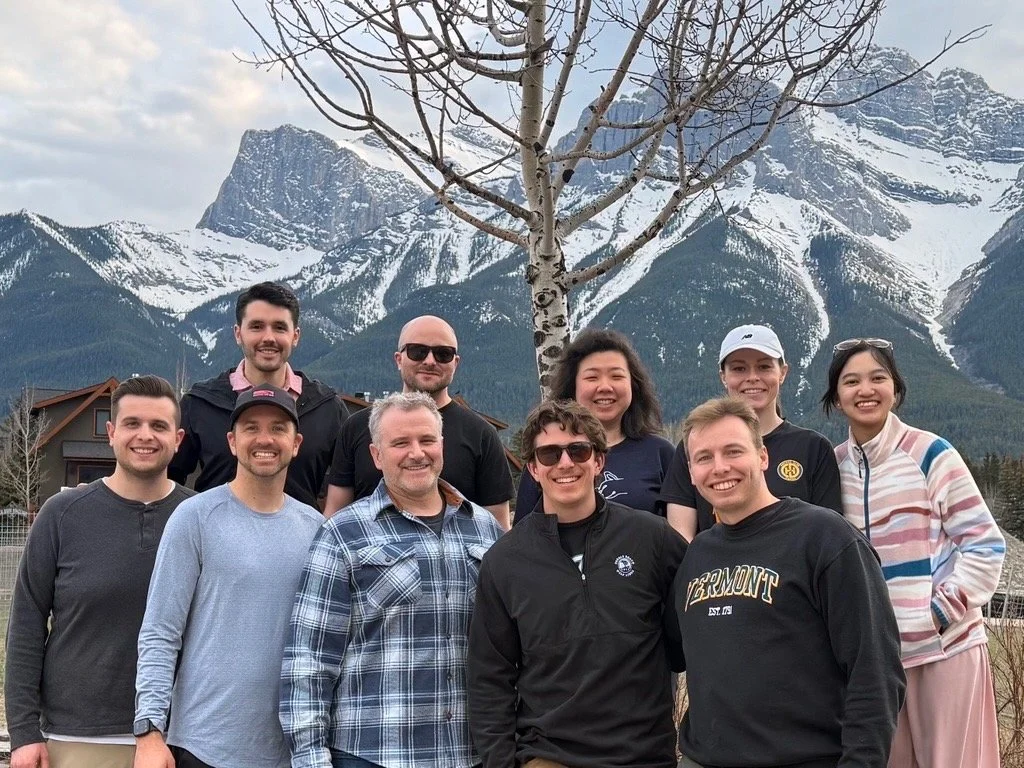
This photo?
That is us at the end of a long mountain hike.
Tired.
Windburned.
Wet feet.
Somehow, still smiling.
Proof that we made it up, and more importantly, back down.
A mountain is a useful analogy for knowledge work.
On a mountain, the work is visible. You can see:
who is ahead
who is behind
where the group bunches up
where momentum slows
Knowledge work is the opposite.
The trail, the load, and the waiting are mostly invisible.
So here is what we saw on our hike.
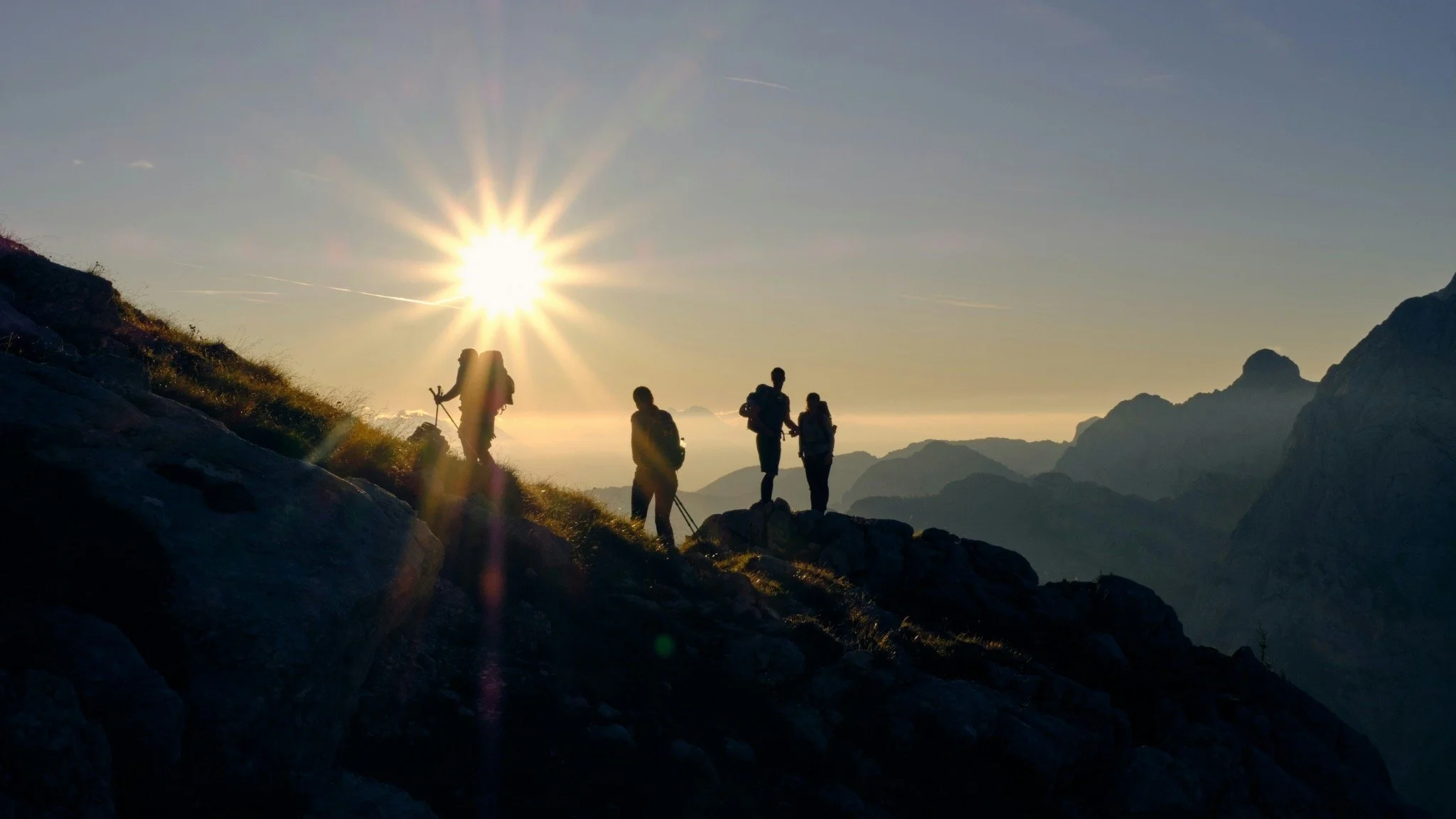
We climbed it together.
Some of us were experienced hikers.
Some of us were definitely not.
Some were quick out of the gate.
Some were steady for hours.
Some were great at reading the trail.
Some carried extra food.
Some kept the group laughing.
Some knew when to pause.
Some noticed when someone needed help.
The mountain had its own agenda.
Snow.
Fatigue.
Slippery terrain.
Cold weather.
Limited food.
Changing conditions.
It did not matter how fast one person could move.
And the goal was not for one hiker to reach the summit.
The goal was for the team to get there and back together.
At one point, our strongest hiker gave away her spikes and poles.
Not because it helped her go faster.
Because it helped the team keep moving.
On a mountain, individuality matters.
Everyone brings something different:
Strength.
Stamina.
Awareness.
Preparation.
Encouragement.
But individual performance does not win the climb. Team performance does.
The best team is not made of identical hikers.
It is made of people who understand each other well enough to move together.
Projects are the same.
A person can have a productive day.
They can answer emails.
Start tasks.
Solve details.
Move fast.
Feel busy.
And that can be good.
But the better question is not:
Was I productive today?
The better question is:
Did the team move the work forward?
Did the decision get made?
Did the handoff become clear?
Did the review happen?
Did the next person get what they needed?
Did something actually move to being completed?
That is flow.
Not individual busyness.
Team rhythm.
In Lean thinking, waste can hide inside what appears to be productivity.
Too many handoffs.
Too much waiting.
Too much rework.
Too many people carrying invisible load.
It feels active. But active is not the same as flowing.
Lean has a name for this:
DOWNTIME
Defects.
Overproduction.
Waiting.
Non-utilized talent.
Transportation.
Inventory.
Motion.
Extra-processing.
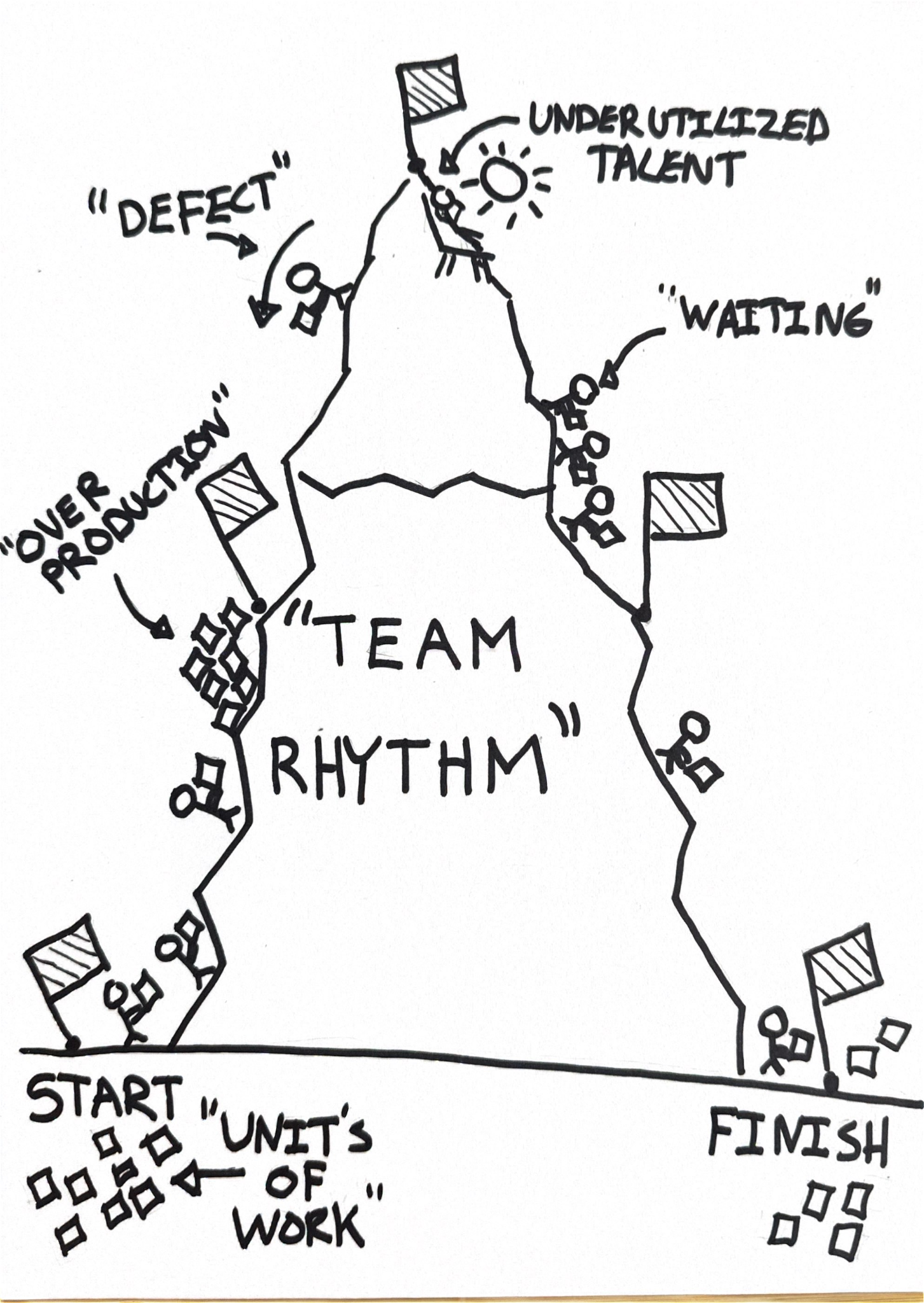
You can see all of it on a mountain.
The wrong trail.
The pack that’s too heavy.
The hiker standing still while the group waits at the switchback.
The strong climber whose judgment never gets asked.
The endless circling at the trailhead before anyone starts climbing.
The detour to get the perfect photo.
A mountain teaches this quickly.
If everyone starts moving at their own pace, the group stretches out.
The front loses sight of the back.
The back loses confidence in the route.
Small problems become bigger problems.
The same thing happens on projects.
One person pushes work forward before the decision is clear.
Another starts a task before the inputs are ready.
Another waits for review.
Another carries too many open loops.
Another has the answer, but no one knows to ask.
Everyone is busy.
But the work is not flowing.
That is why high-performing teams do not simply move faster. They move together.
They limit what is active.
They make the path visible.
They shorten feedback loops.
They finish before starting more.
They protect the team from overload.
One-piece flow can feel counterintuitive. It can feel slower.
Why not start everything?
Why not get everyone moving?
Why not push harder?
Because started work is weight.
Finished work is value.
The goal is not for everyone to climb at their own pace.
The goal is to help the team reach the summit together.