
Accountability Isn’t Pressure
Let’s double-click on how high-performing teams hold results and relationships together on a project.
Most teams say they want accountability. What they usually mean is pressure.
Deadlines get tighter.
Meetings get heavier.
Someone starts “checking in” more often.
The intent is good.
The effect is not.

Pressure makes people defensive.
Or quiet.
It feels like progress, but it’s usually just stress.
Real accountability works differently.
On every project, teams are walking a tightrope between results and relationships.
Lean too hard into results, people retreat.
Lean too hard into relationships, nothing moves.
The middle is unstable by design.
That’s where high-performing teams live.

Accountability isn’t pressure applied to people.
It’s feedback embedded in the process.
Think about what actually holds a team in that tension.
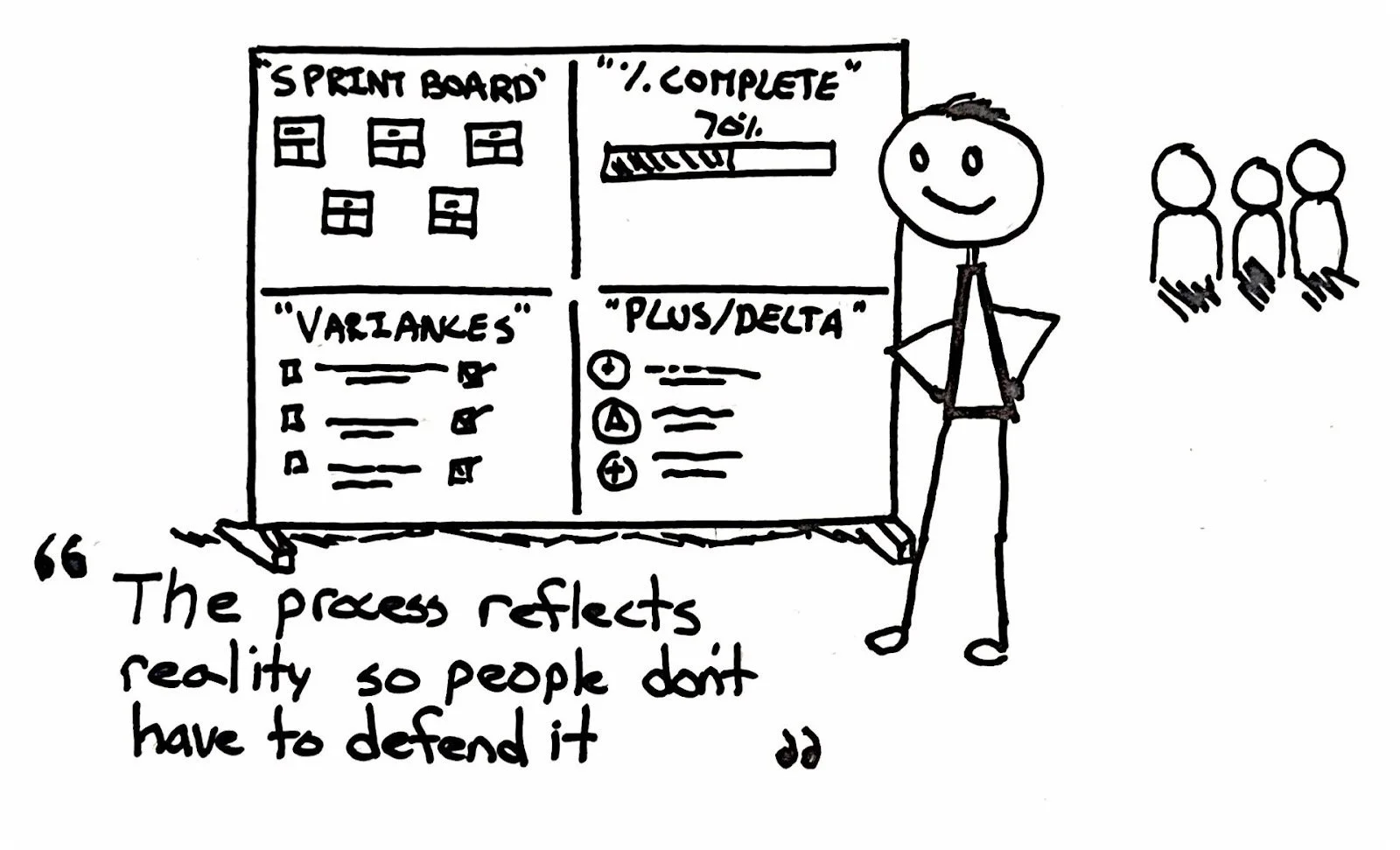
A sprint board doesn’t nag anyone.
It simply makes commitments visible.
Percent complete doesn’t accuse.
It replaces optimism with reality.
A variance log doesn’t blame.
It shows the gap between plan and outcome and asks, What did we learn?
Plus–delta conversations don’t attack.
They create a place where feedback is expected, not personal.
None of these tools makes the work easier.
They make it clearer.
And clarity is uncomfortable.
When work is visible, you can’t hide behind good intentions.
When commitments are public, follow-through matters.
When feedback is routine, silence becomes a signal.
That discomfort isn’t a failure of leadership.
It’s a sign the system is working.
Strong teams don’t eliminate tension. They distribute it.
They design processes that carry the load so people don’t have to.
They let the system surface truth early, before frustration or mistrust has time to build.

If your project feels perfectly calm, ask why.
If it feels honest but slightly uneasy, you’re probably still on the rope.
The process reflects reality, so people don’t have to defend it.
That’s where real progress happens.