
Loads Don’t Like Turning Corners
Loads don’t like changing directions.
They really don’t.
Gravity prefers to go straight down.
Forces are stubborn that way. They seek the simplest path available.
Structural engineers spend a lot of time thinking about these paths because a building is not just a collection of rooms. It is a conduit for the earth’s forces.
Every load acting on a building must eventually find its way to the ground.
Snow landing on the roof moves through the deck into beams.
From beams into columns.
From columns into the foundation.
And finally into the soil beneath the building.
This invisible journey is called the load path.
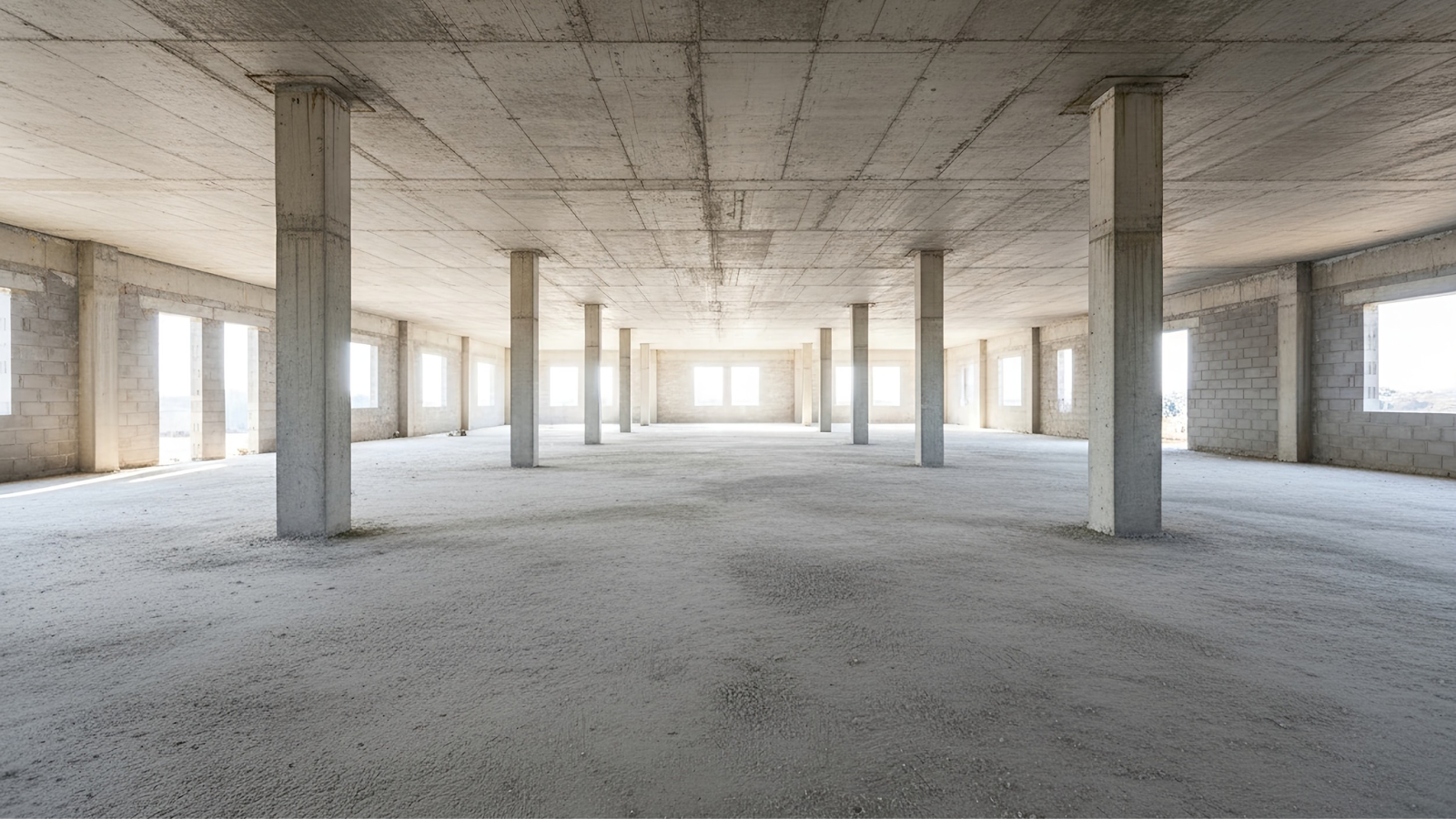
Image SourceWhen load paths are simple and continuous, buildings behave beautifully.
Columns stack on columns.
Walls align with walls.
Forces travel quietly and efficiently to the earth.
But buildings don’t always cooperate.
Imagine a residential tower sitting above an open parking level.
The columns above no longer line up with the columns below.
The natural vertical path for gravity disappears.
The forces still exist.
They still need somewhere to go.
So we introduce transfers.
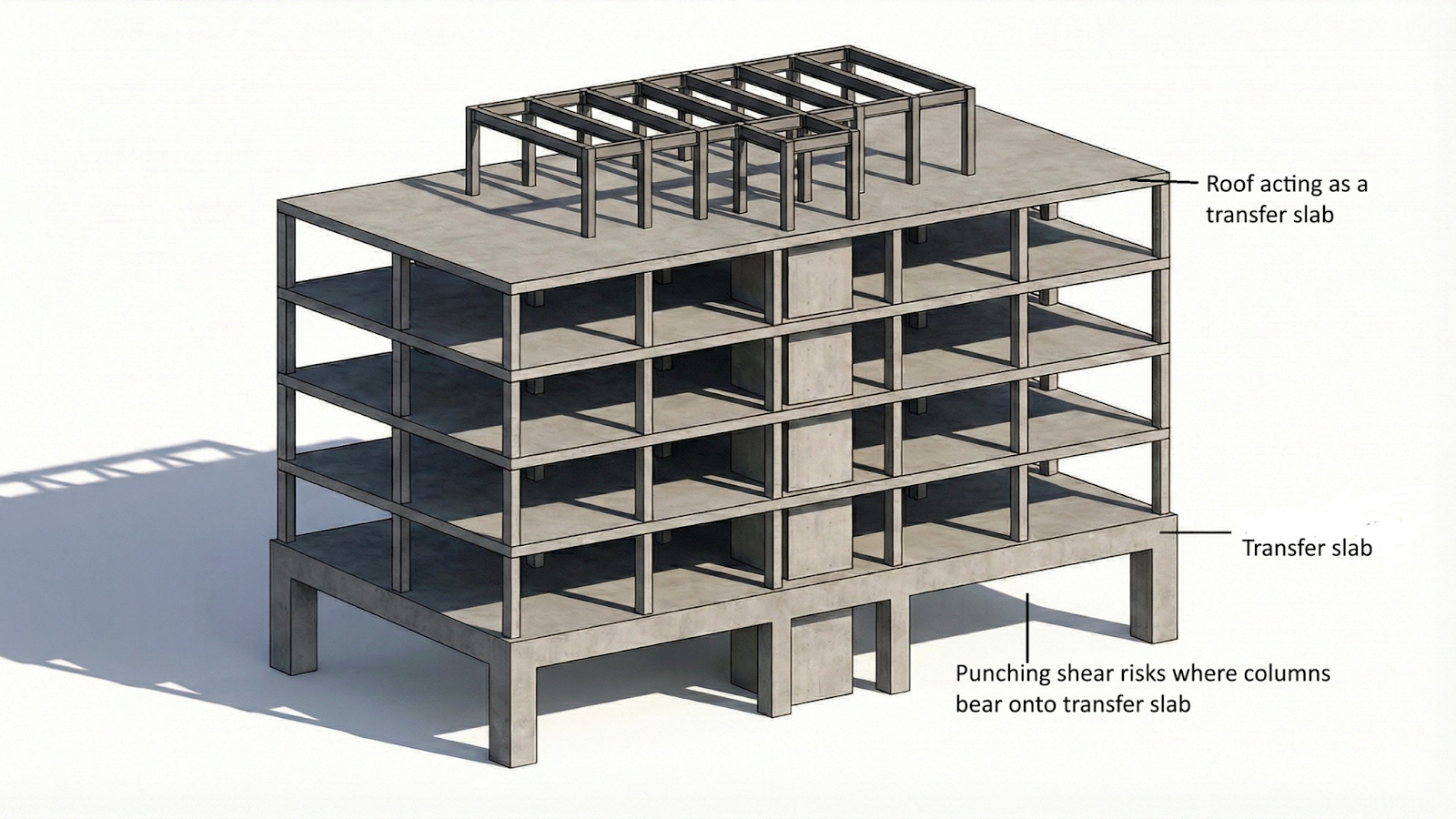
A transfer beam or transfer slab redirects loads sideways across the structure before sending them back down toward the ground.
Transfers are where structural engineering becomes interesting.
They require creativity and careful problem solving.
Engineers tend to enjoy them.
Cost consultants usually don’t.
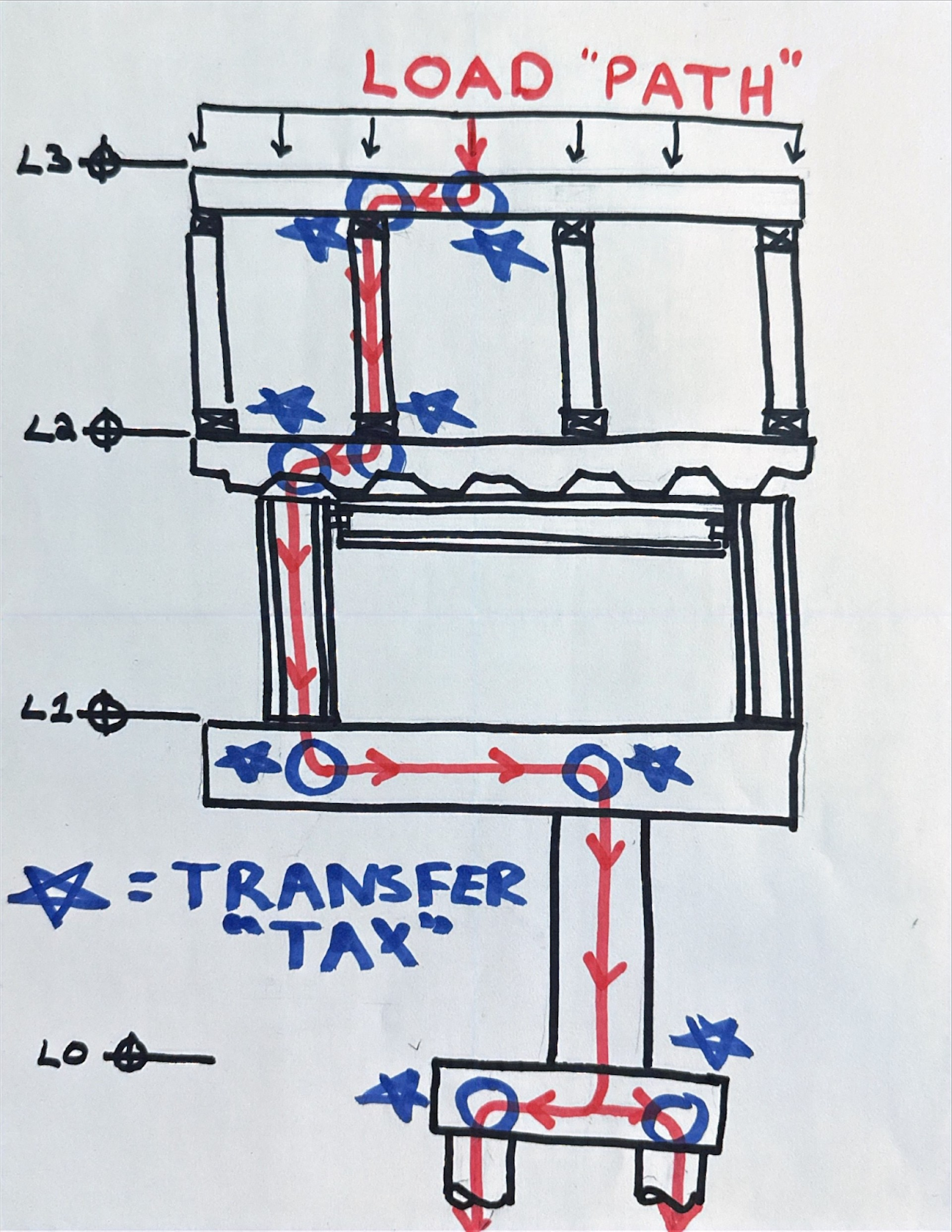
Because every time a load changes direction, the structure has to work harder.
Concrete gets thicker.
Steel gets heavier.
Reinforcement becomes denser.
Foundations grow larger.
When loads turn corners, the building pays a tax.
We sometimes call it the transfer tax.
This doesn’t mean transfers are wrong.
They can unlock great architecture and create valuable space.
But they are never free.
Simple load paths produce remarkable results:
• lighter structures
• lower carbon
• faster construction
• more budget for the parts of the building people actually see

From an engineer’s perspective, elegance isn’t just about how a building looks.
It’s about how clearly forces move through it.
The best buildings give loads what they prefer most:
a straight path to the ground.