
The Average User is a Myth
Who Do You Design For?
It sounds like a simple question.
But in public buildings, it gets complicated quickly.
A school is not designed for one student.
A recreation centre is not designed for one athlete.
A hospital is not designed for one patient.
A library is not designed for one reader.
A civic building is not designed for one kind of body, mind, age, ability, or experience.
Public buildings are for everyone.
And that is the challenge.
We often try to solve this by imagining the average person.
The average user.
The average body.
The average experience.
The average day.
It sounds practical.
But designing for the average person is how we accidentally design people out.
Real people are not averages.

Real people arrive with strollers, walkers, wheelchairs, injuries, aging parents, tired kids, coffee in one hand, and a hundred things on their mind.
They arrive late.
They arrive distracted.
They arrive anxious.
They arrive unfamiliar with the building.
They arrive differently than we imagined.
So maybe the better question is not:
Will this work for most people?
Maybe the better question is:
Who will this be hardest for?
The person using a wheelchair.
The person with low vision.
The parent pushing a stroller.
The senior moving slowly through winter.
The patient arriving nervous.
The child trying to find the washroom.
The visitor entering the building for the first time.
When we design for the most constrained user, we often create a better experience for everyone.
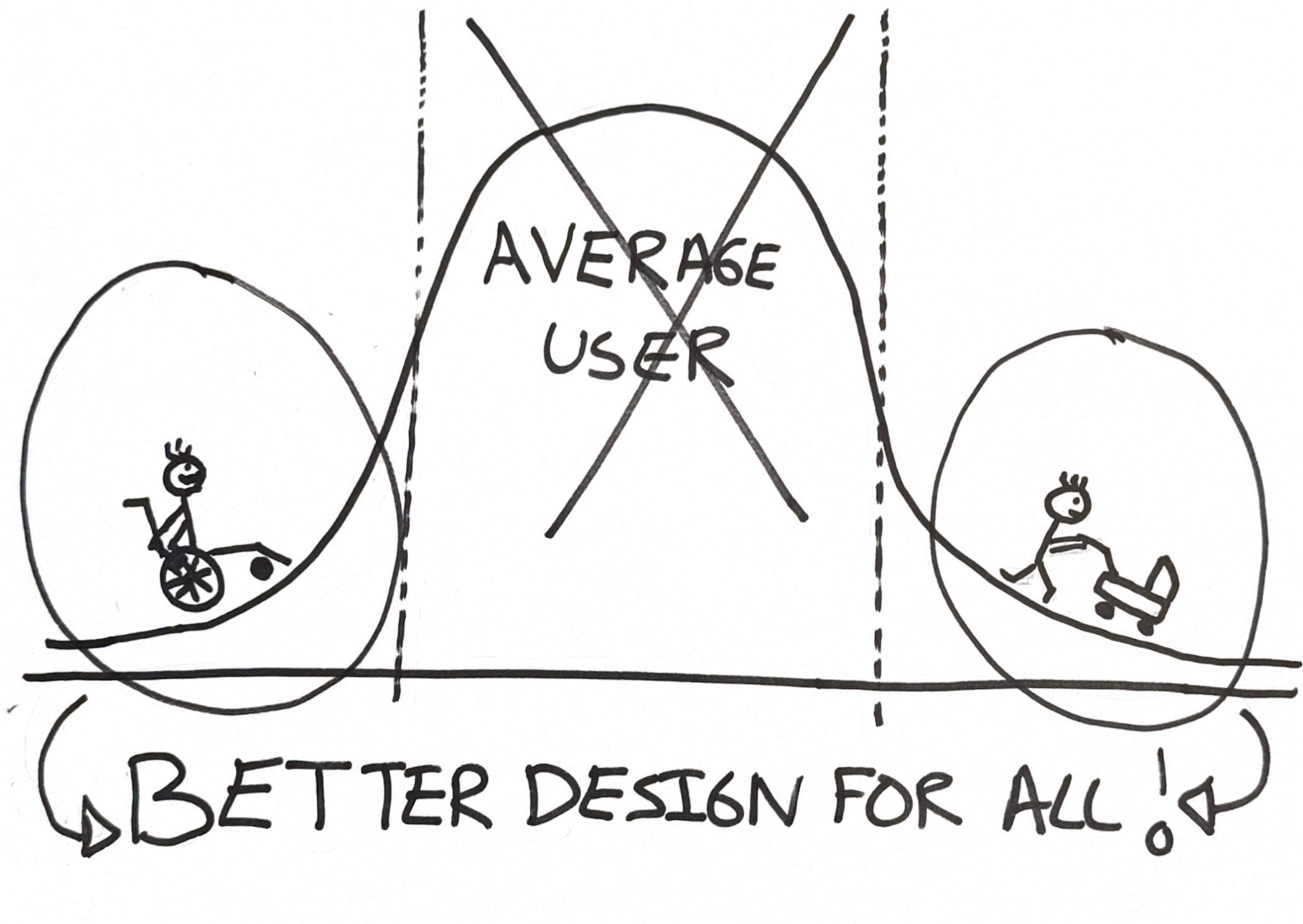
A curb cut may be essential for someone using a wheelchair.
But it also helps parents with strollers, kids on bikes, travelers with suitcases, workers moving carts, and anyone crossing a snowy sidewalk with less effort.
Automatic doors help people with mobility challenges.
They also help parents with strollers, seniors carrying groceries, patients on crutches, travellers with luggage, and anyone walking into a building with their hands full.
Clear signage helps someone with low vision or cognitive challenges.
It also helps the rest of us when we are tired, late, distracted, or walking into a building for the first time.
The most constrained user is not the exception.
The most constrained user is the teacher.
They show us where the path is too narrow.
Where the entrance feels like an afterthought.
Where the button is too hard to find.
Where the corridor is confusing.
Where the building asks too much of the people using it.
That is why designing for all does not water down the design. It sharpens it.
It forces teams to think more clearly about movement, effort, safety, dignity, comfort, and care.
This matters for everyone who builds buildings.

Architects shape how people move, gather, enter, wait, rest, and feel.
Engineers shape the hidden systems that make those spaces safe, comfortable, durable, and usable.
Contractors shape how the idea becomes real, where the details either hold together or fall apart.
Each discipline has a chance to ask the same question:
Who is this hardest for?
That question can change the entrance.
The corridor.
The washroom.
The ramp.
The lighting.
The signage.
The structural detail.
The construction sequence.
And the way a decision is made.
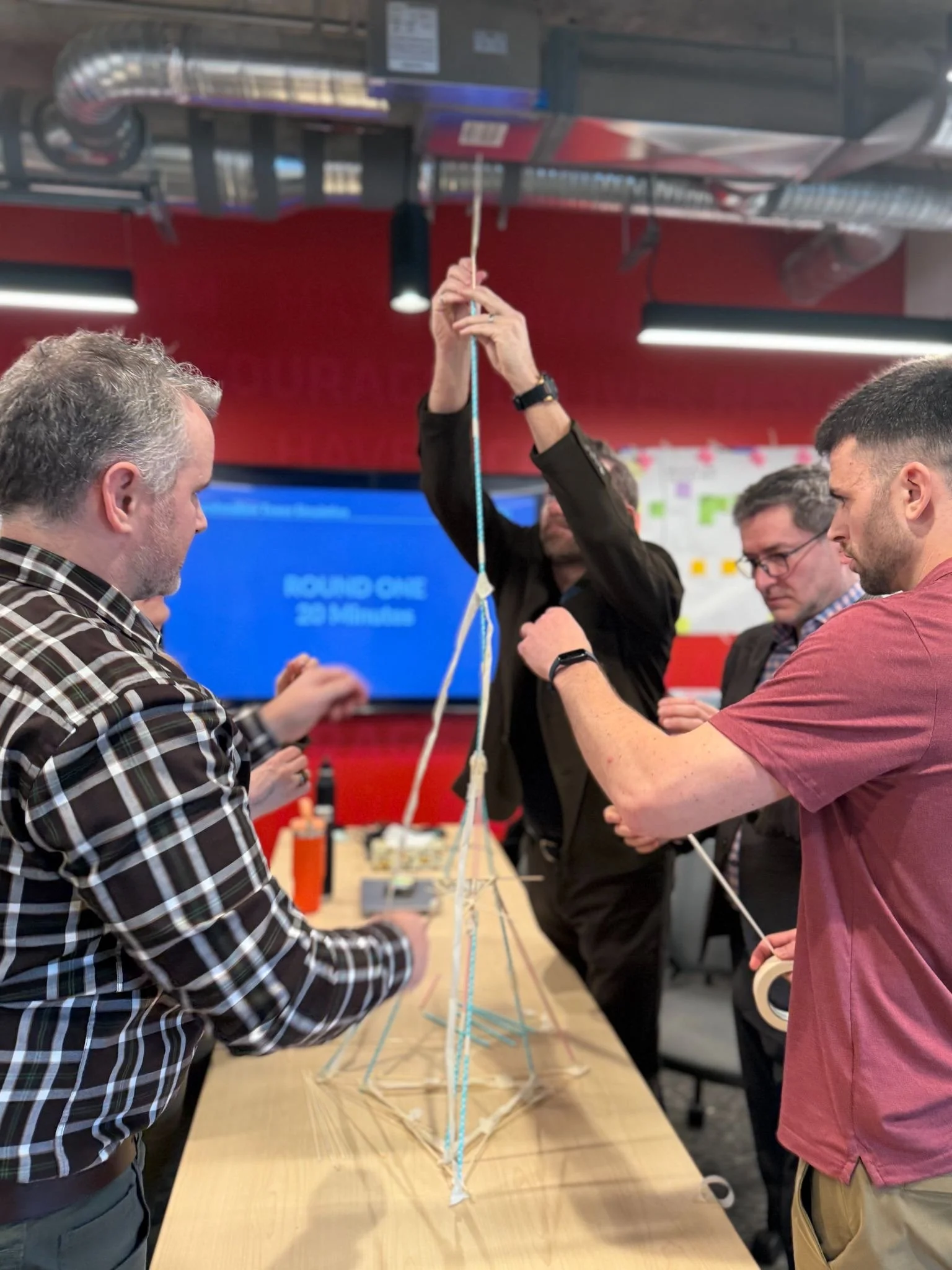
The same idea applies to project teams.
The best meetings are not designed for the loudest person in the room.
They are designed so the quiet person, the new person, and the person who needs time to think can still contribute.
The best drawings are not designed for the person who already understands the building.
They are designed for the person in the field who has to build it under pressure.
The best communication is not designed for the expert.
It is designed for the person with the least context.
That is not lowering the bar.
That is raising the standard.
Good buildings should not make people fight to belong.
Good teams should not make people fight to contribute.
They should quietly say:
You were considered here.
So this week, look for the edge.
Look for the person with the least access.
The least context.
The least confidence.
The least room to adapt.
Then ask:
What would make this easier for them?
Designing for everyone is not about pleasing everyone.
It is about noticing who might be left out.
And when the most constrained person can move through a building, a meeting, or a project with dignity, clarity, and confidence, everyone benefits.
That is true for buildings.
That is true for teams.
And maybe that is the kind of design our industry needs more of.