
The Comfort Code
Strength is about survival.
Stiffness is about comfort.
Strength asks:
Is it safe?
Stiffness asks:
Does it feel right?
Those are not the same question.
A building can be structurally safe and still feel uncomfortable to the people inside it.
That is one of the hidden truths of structural engineering:
Human sensitivities often govern structural performance before structural capacity does.

People do not experience buildings through calculation sheets. They experience them through their bodies.
A floor that vibrates.
A screen that shakes.
A tower that sways.
A glass wall that flexes.
A partition that jams.
A balcony that feels a little too alive.
None of these things may mean the building is unsafe.
But they can make the building feel wrong. And that matters.
Think about a mixed-use building.
On paper, mixed-use sounds efficient.
Office. Residential. Fitness. Retail. Amenity.
All stacked and stitched together.
A small city inside one structure.
But every use has a different tolerance for movement.
A gym floor can handle a bit of bounce.
People expect movement there.
They are running.
Jumping.
Lifting.
Sweating.
But place that same gym beside an office— on the same floor, in the same structural bay— and suddenly the question changes.
The floor may still be strong enough.
But what happens when a workout class starts jumping?
What happens when vibration travels into the office next door?
What happens when someone’s computer screen starts bouncing while they are trying to work?
Now the structure is not failing by strength.
It is failing by experience.
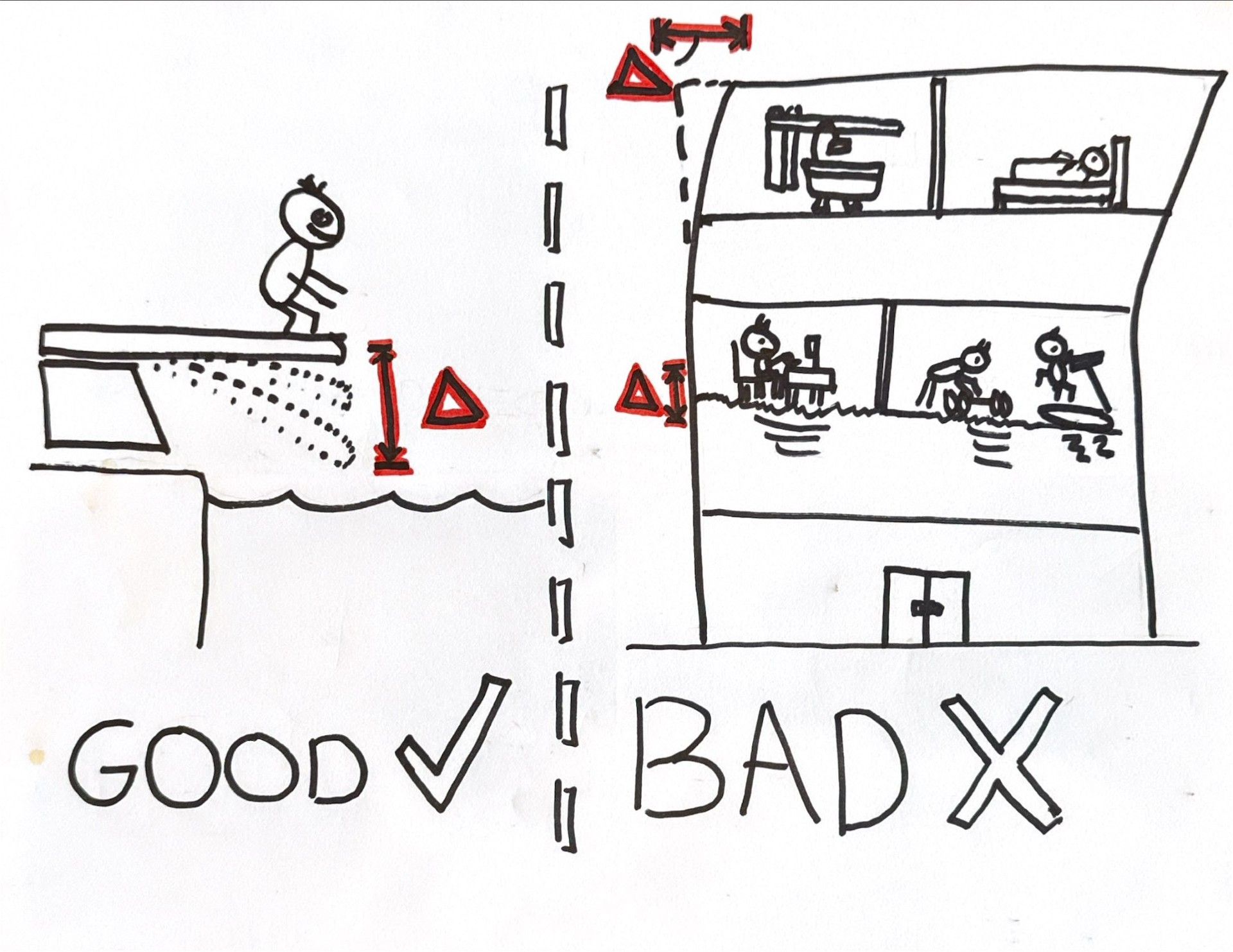
The same movement that feels acceptable in one space can feel completely unacceptable in another.
An office tower has one tolerance.
A residential tower has another.
Because an office is somewhere you visit for the day.
A home is where you sleep.
Where your kids play.
Where your body expects to fully relax.
You can leave the office after a severe storm.
You do not want to feel like you need to leave your home.
So the requirements change.
Residential buildings often require tighter limits on drift, sway and movement.
Not just because of the code. Because of the life happening inside.

That is the quiet magic of good structural design.
The best structure is not always the one people notice.
It is often the one they never have to think about.