
What RFIs Are Really Telling Us
Every structural consultant knows the call.
"How quickly can we get the foundation permit out?"
"It's just piles. We can figure out the rest later."
"Can we shave a couple of months off the schedule?"
When timelines tighten, a separate foundation permit often becomes the project's escape hatch.
Structural engineers are asked to design a foundation for a building that hasn't been fully designed yet, supporting a structure that may change several times before the final drawings are complete.
The permit goes out.
The project moves forward.
For now.
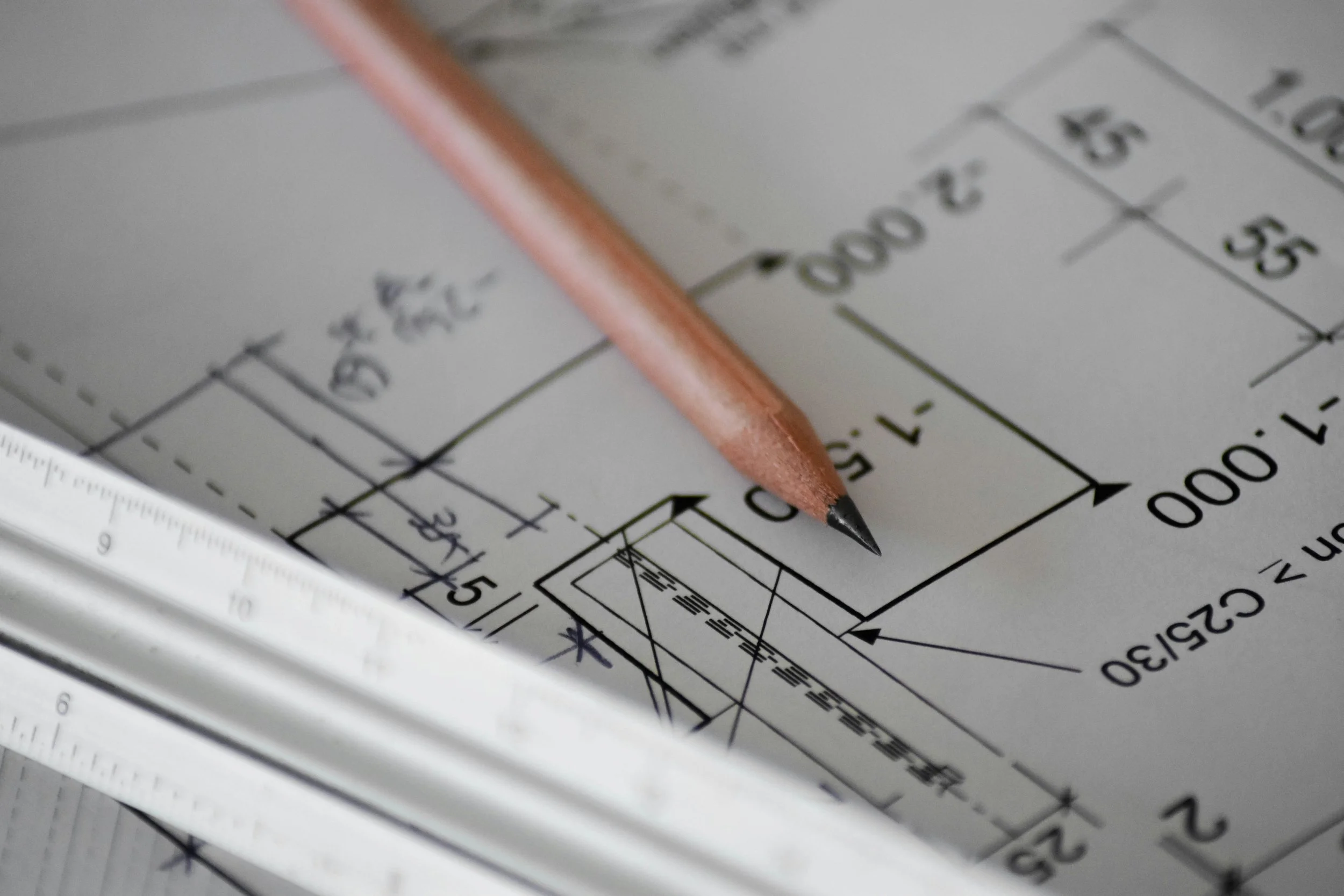
If you step back, it's remarkable that buildings get built at all.
A building is an incredibly complex three-dimensional system, yet for more than a century we've communicated it through two-dimensional drawings.
It's an extraordinary feat of coordination and professional skill.
But no matter how good the drawings are, there's always a gap between what's shown on paper and what it takes to build the real thing.
The question is:
Where does that gap get closed?
On many traditional projects, it closes in the field.
One question at a time.
Those questions arrive as Requests for Information.
An occasional RFI is normal.
No drawing set will ever anticipate every condition.
But when projects generate hundreds (or even thousands) of RFIs, it's worth asking a different question.
Are we looking at a communication problem?
Or are we looking at decisions that simply happened too late?
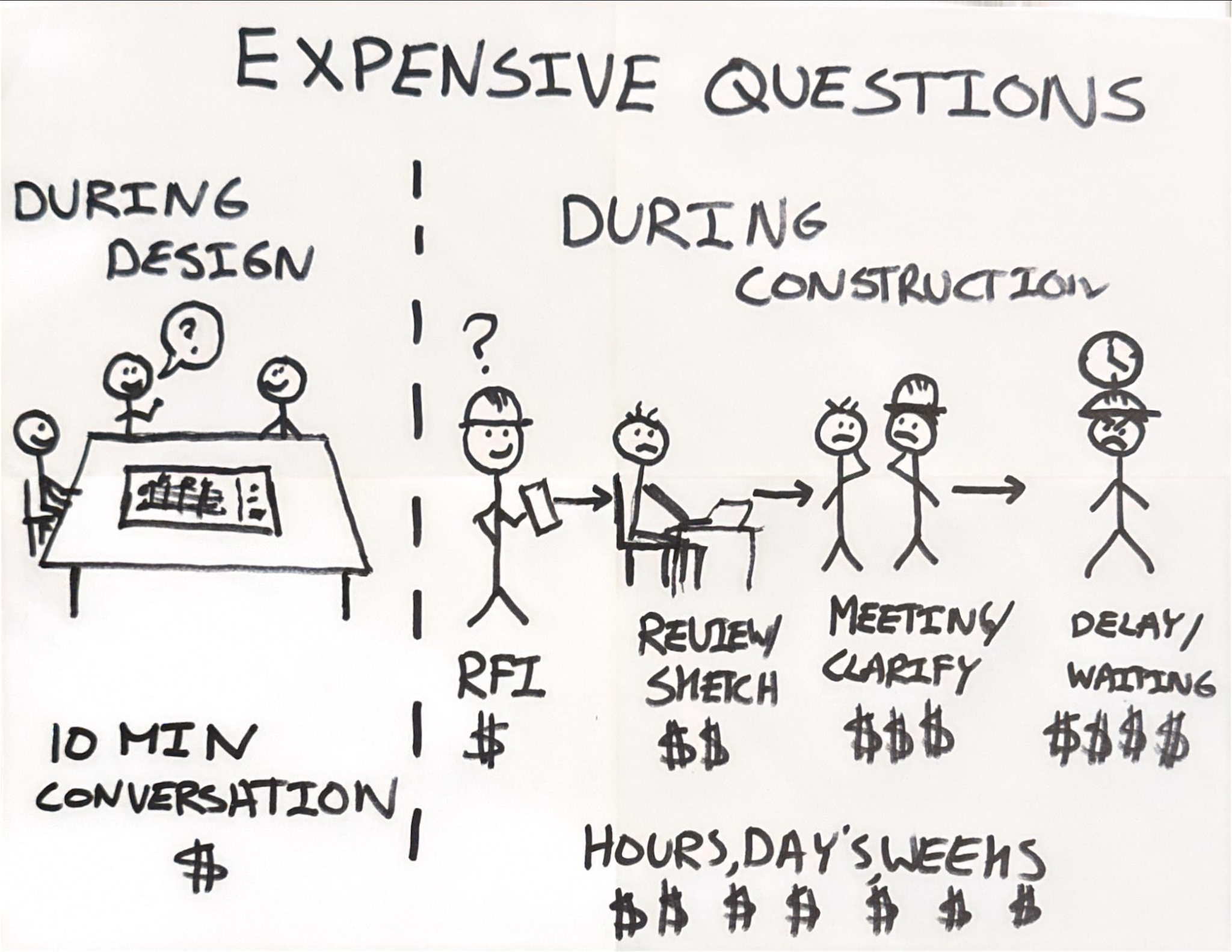
Every RFI represents someone trying to move work forward.
The superintendent needs an answer.
The trade partner needs clarity.
The consultant reviews the question.
Everyone is doing exactly what the system asks them to do.
The challenge is that the question is now arriving when the project is already under construction.
A question that might have taken an hour and a conversation during design now requires reviews, revised sketches, updated coordination, schedule impacts, and sometimes crews waiting for direction.
The question didn't become more difficult.
It became more expensive.
That's one of the biggest lessons collaborative delivery has taught us.
Collaborative projects don't eliminate difficult questions.
They simply ask them sooner.
Trade partners bring constructability into the conversation while the design is still evolving.
Owners help clarify priorities before documents are finalized.
Designers receive feedback while ideas are still flexible.
The conversation happens in the room instead of in the field.
That doesn't eliminate RFIs.
But it often changes what they represent.
Instead of correcting avoidable uncertainty, they're reserved for genuinely unforeseen conditions.

Perhaps that's a useful way to look at the next RFI log.
Not as a measure of how hard people worked.
Not as a reflection of any one discipline.
But as feedback on when the project started having the conversations it needed to have.
Because every RFI is really answering the same question.
The only difference is whether we asked it when the answer was inexpensive, or when it became costly.