
Snowshoes vs Stilts
On almost every project, we get asked,
“What kind of foundation are you using?”
Almost every time, people look to the structural engineer for the answer.
But we don’t choose the foundation.
The ground does.
That’s a bit of an oversimplification.
Structural engineers absolutely influence the outcome.
We size it. We optimize it. We help choose between options.
But those options are already constrained.
We’re working within what the ground will allow.
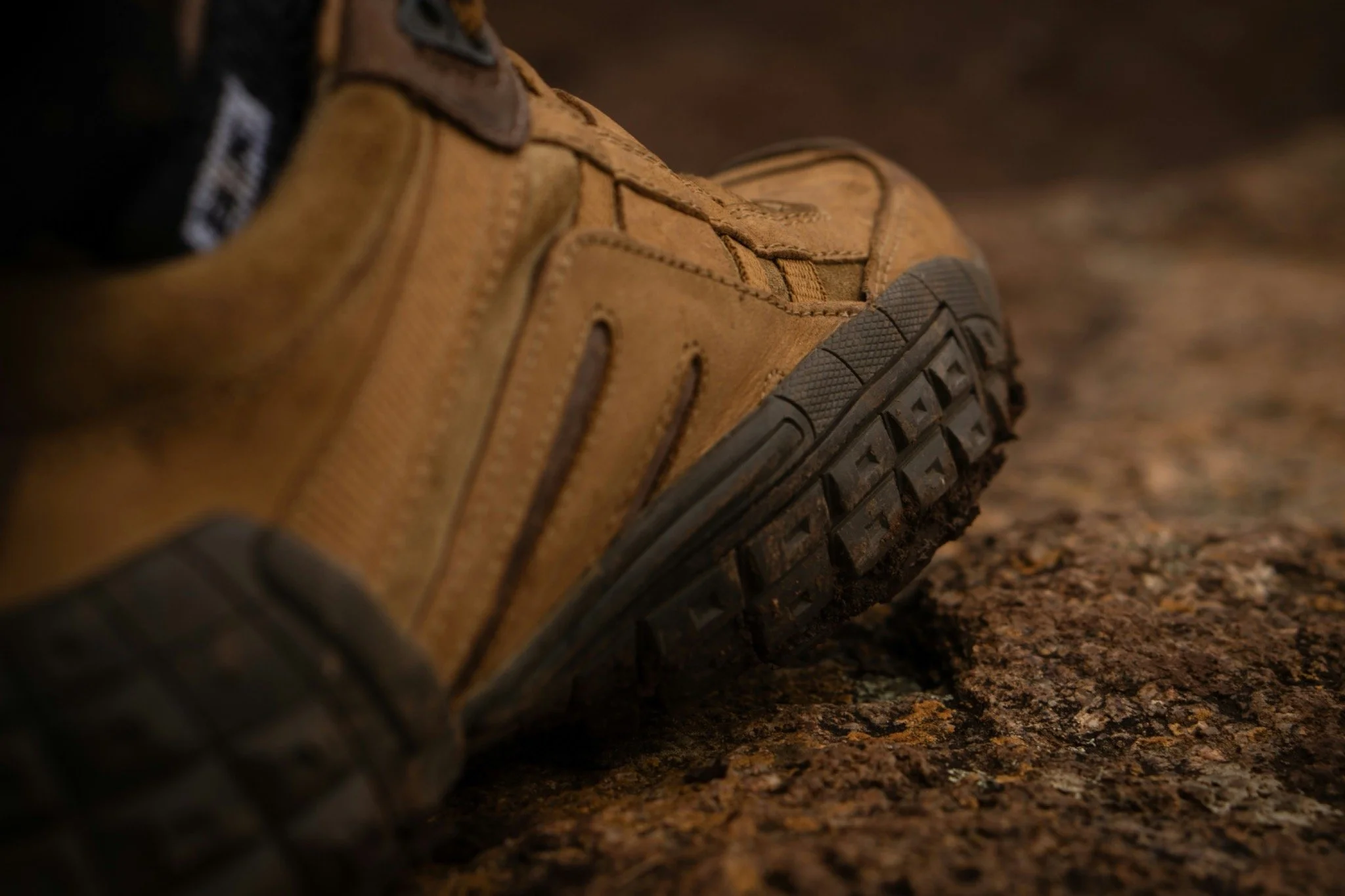
The challenge is that we don’t fully know the ground.
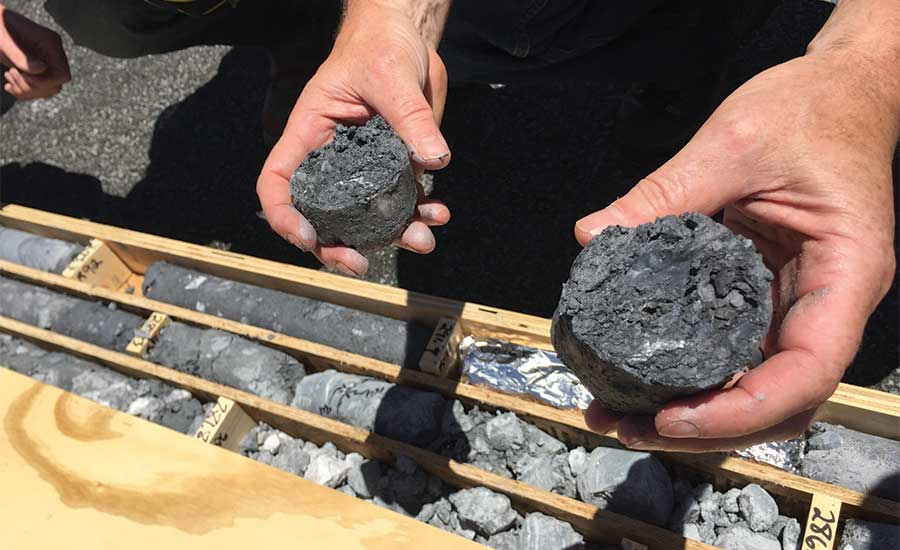
We take boreholes. A few test pits. Maybe some lab samples.
From that, we build a picture of what’s happening below the surface.
But it’s just that; a picture. A limited one at that.
We’re making big decisions based on a small number of data points.
Between those boreholes, the soil can change completely.
Strong in one spot.
Soft a few metres away.
Wet. Dry. Compressible. Unpredictable.
Geotechnical engineering is the best tool we have to understand the ground, but it’s still an interpretation.
And that makes it one of the biggest risks on any project.
Not a line item. Not a checkbox. A risk that needs to be respected.
So when people ask what foundation we’re using, the real answer is usually:
“It depends.”
Then we explain it.
Think of it like walking across snow.
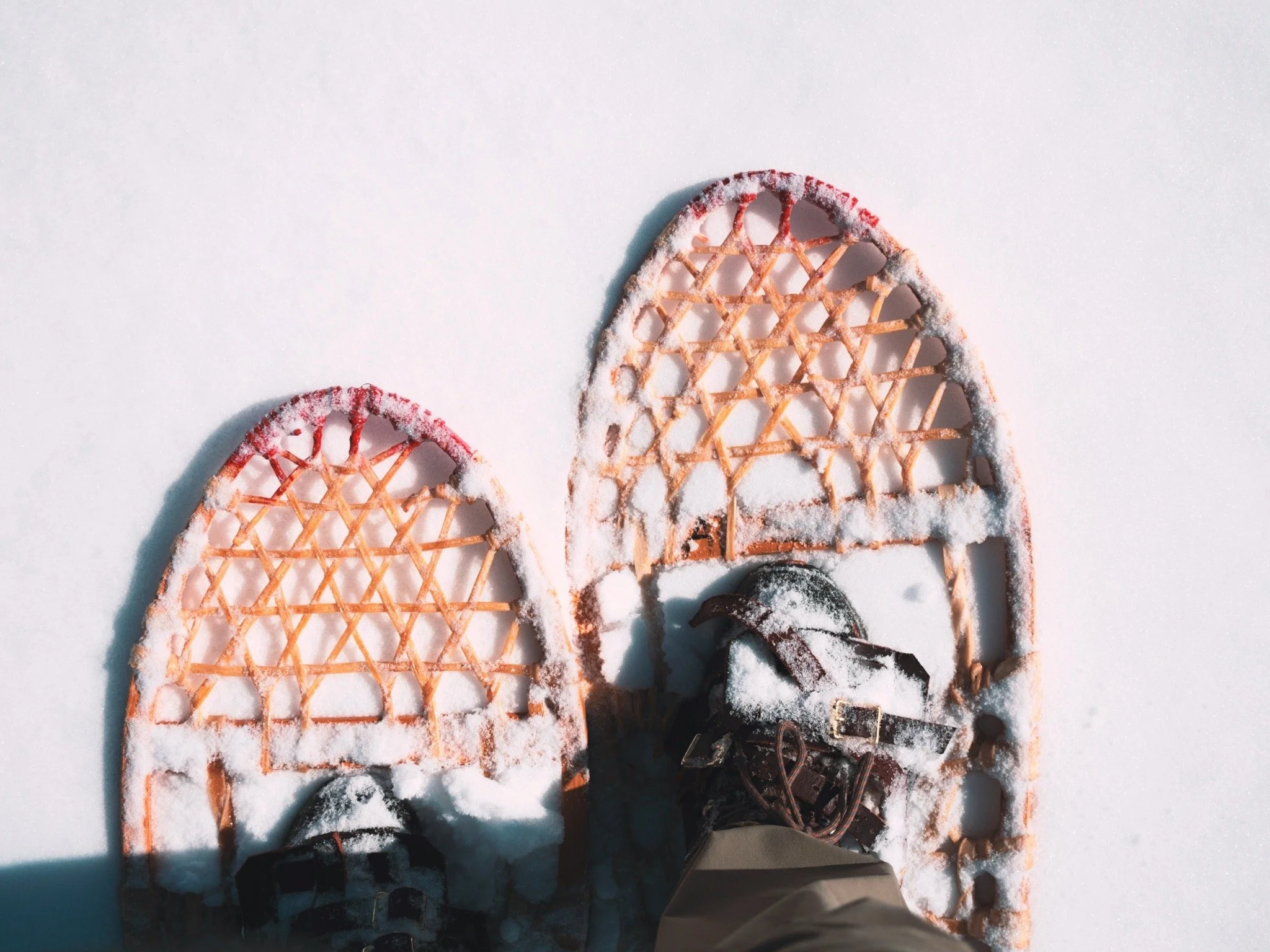
If the snow is firm, you can wear snowshoes.
You spread your weight out and stay near the surface.
If the snow is soft, you need stilts.
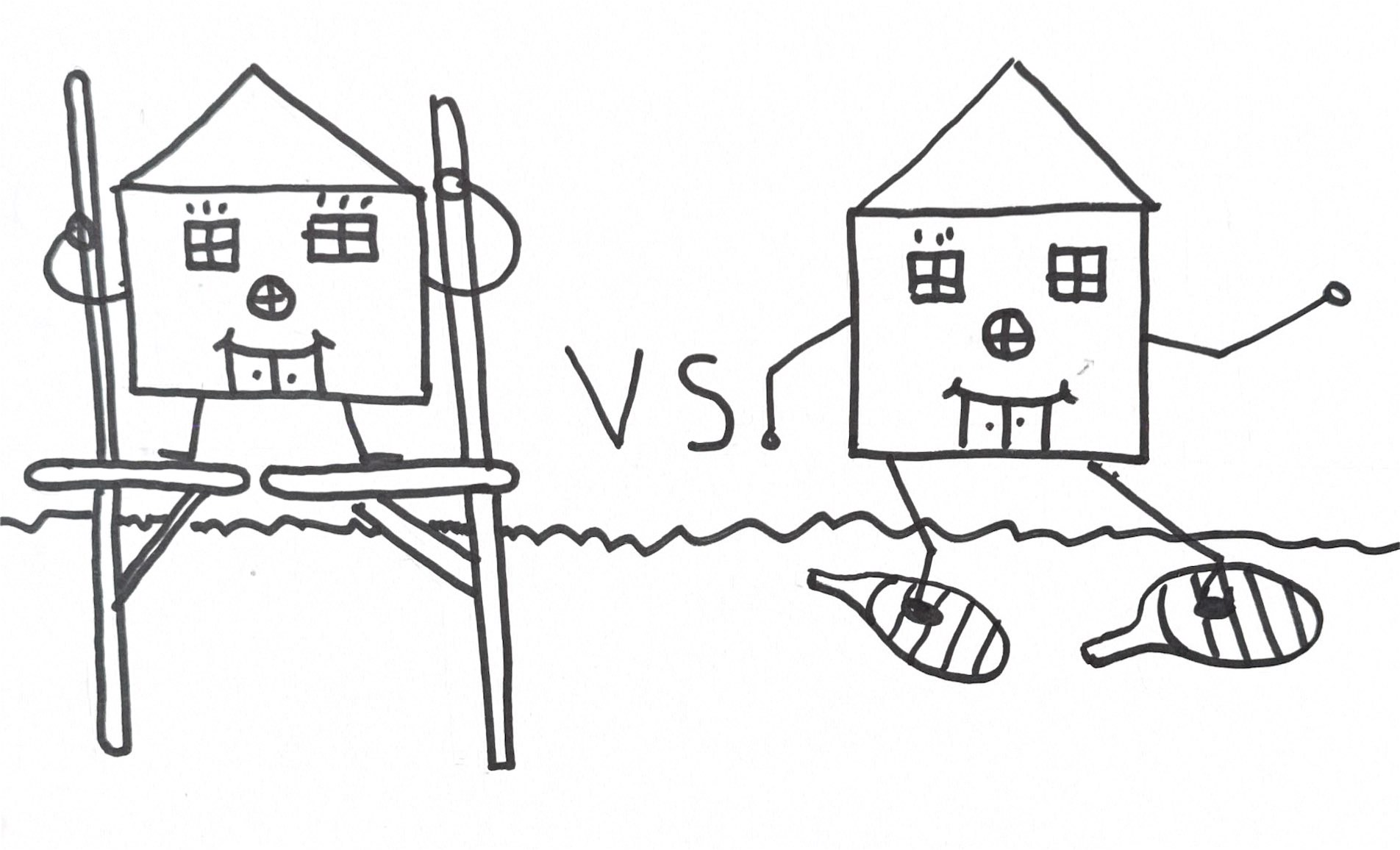
You push through the weak layer and transfer your weight to something deeper and stronger.
That’s foundations.
Snowshoes are shallow foundations.
Footings. Mats. Wide. Efficient. Close to the surface.
Stilts are deep foundations.
Piles. Elements that bypass weak soil and carry the load down to something more reliable.
We’re not choosing between two systems we like.
We’re responding to what the ground will support.
In some places, the answer is obvious. In others, there’s a choice.
That’s where collaboration matters.
Geotechnical defines what’s possible.
Structural works within that space.
Then climate steps in.
In colder regions, frost becomes a major driver.
Footings have to go below frost depth; often 1.5 to 2.5 metres or more.
If they don’t, the ground freezes, expands and lifts the structure.
Frost heave isn’t subtle. The forces are massive.
So even if the soil near the surface looks good, you may still need to go deeper just to get below that active zone, which changes everything.
This is also where good geotechnical engineering pays for itself.
It’s easy to treat it like a commodity.
Lowest fee. Minimum scope. Basic report.
But a stronger geotechnical program reduces uncertainty, opens up options, and can significantly reduce foundation cost.
More investigation. Better collaboration.
In some cases, physical testing can unlock capacity that isn’t obvious at first glance.
We’ve seen the other side of it too.
On a recent project, we designed around the geotechnical report, only to encounter boulders, sand and conditions that weren’t anticipated.
Construction slowed.
Pile types had to be reconsidered.
Costs moved late in the project.
That’s the risk.
You’re making decisions early based on limited information.
If that picture is off, the consequences show up when it’s hardest to change.
Before we design the building, we need to understand the ground.
Because the ground is already shaping the decision.